Understanding CRISPR-Cas9: A Revolutionary Gene Editing Tool
CRISPR-Cas9, often shortened to CRISPR, has revolutionized the field of gene editing. This technology allows scientists to precisely target and modify DNA sequences within a living organism’s genome. Unlike previous gene editing techniques, CRISPR is significantly cheaper, faster, and more accurate, making it accessible to a wider range of researchers and opening up exciting new possibilities in various fields.
The Mechanism Behind CRISPR’s Precision
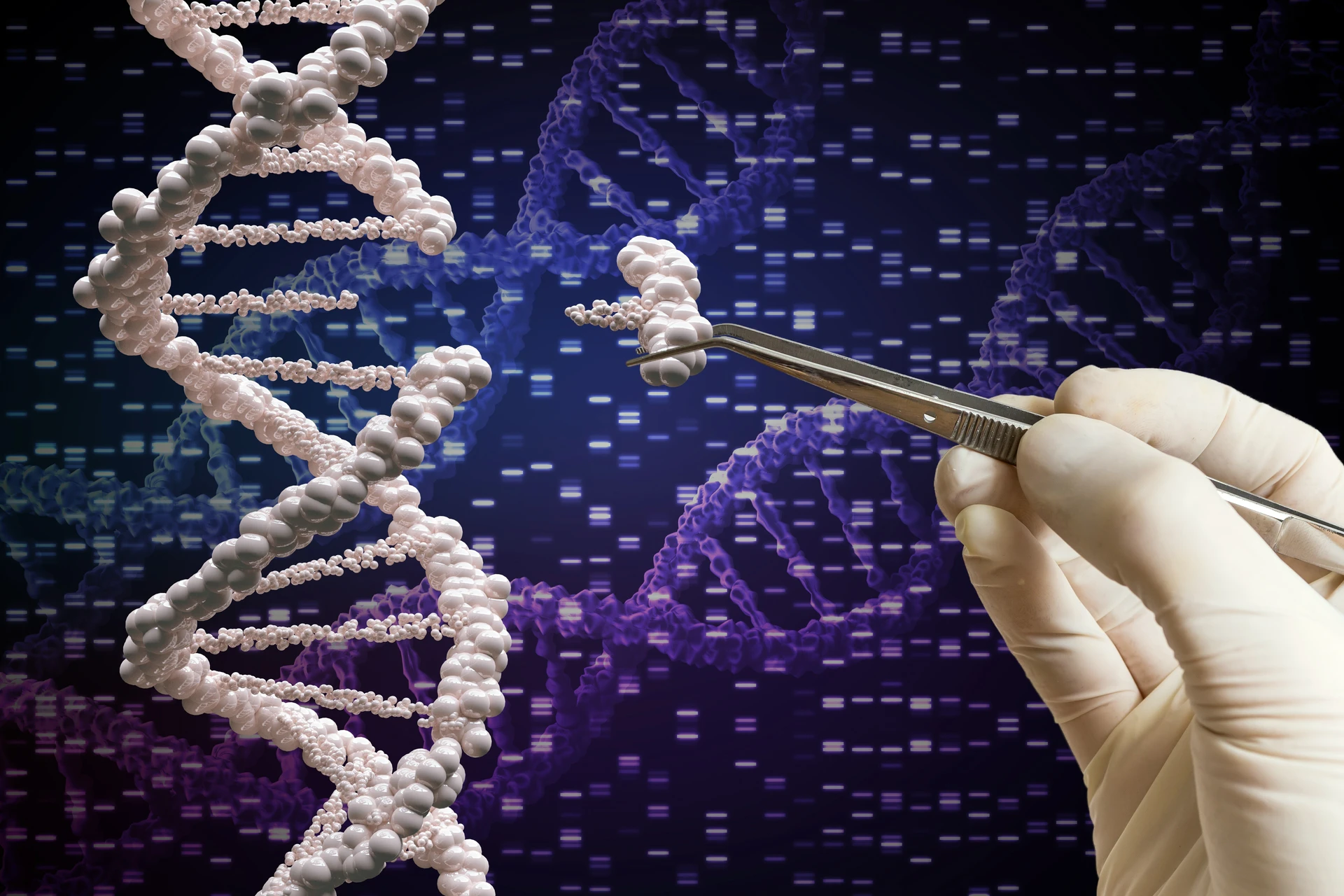
CRISPR’s power lies in its two-component system: Cas9, an enzyme that acts like molecular scissors, cutting DNA at a specific location; and guide RNA (gRNA), a short RNA molecule that directs Cas9 to the target DNA sequence. The gRNA is designed to be complementary to the target DNA, ensuring Cas9 cuts only at the intended site. This precision is crucial for avoiding unintended mutations and off-target effects, a major concern with older gene editing technologies.
The Origins of CRISPR: From Bacterial Defense to Genetic Engineering
Interestingly, CRISPR wasn’t originally developed for gene editing. It was discovered in bacteria as a natural defense mechanism against invading viruses. Bacteria use CRISPR to record snippets of viral DNA, allowing them to recognize and destroy the virus upon subsequent infection. Scientists cleverly adapted this system, creating a programmable tool for targeted gene editing in virtually any organism.
Applications of CRISPR in Medicine: Treating Genetic Diseases
One of the most promising applications of CRISPR is in treating genetic diseases. Many inherited disorders are caused by mutations in a single gene. CRISPR offers the potential to correct these mutations, effectively curing the disease. Researchers are currently exploring CRISPR-based therapies for a range of conditions, including cystic fibrosis, sickle cell anemia, and Huntington’s disease. While still in early stages of development, clinical trials are showing promising results.
CRISPR in Agriculture: Enhancing Crop Yields and Nutrition
Beyond human health, CRISPR is making significant strides in agriculture. Scientists are using CRISPR to improve crop yields, enhance nutritional content, and develop disease-resistant plants. For example, researchers are developing rice varieties with increased vitamin content and crops that are resistant to herbicides and pests. This technology holds the potential to address global food security challenges and improve the quality of food available to populations worldwide.
CRISPR and Biotechnology: Beyond Medicine and Agriculture
The applications of CRISPR extend far beyond medicine and agriculture. In biotechnology, CRISPR is being used to develop new drugs, improve industrial processes, and engineer microorganisms for various applications. For instance, CRISPR is being used to modify bacteria to produce valuable compounds, such as biofuels and pharmaceuticals. Its versatility makes it a powerful tool for a vast array of biological research and development endeavors.
Ethical Considerations and Future Directions of CRISPR
Despite its enormous potential, CRISPR technology raises ethical concerns. The ability to alter the human germline—the genes passed down to future generations—is particularly controversial. Concerns exist regarding unintended consequences and the potential for misuse of this powerful technology. Ongoing discussions among scientists, ethicists, and policymakers are crucial to establishing responsible guidelines for CRISPR research and application, ensuring its benefits are realized while minimizing potential risks.
Overcoming Challenges and Future Research
While CRISPR is a revolutionary tool, challenges remain. Off-target effects, where Cas9 cuts DNA at unintended locations, are still a concern. Researchers are actively developing improved gRNAs and Cas9 variants to increase precision and reduce off-target effects. Further research is also needed to optimize CRISPR delivery methods and to address potential immunological responses in humans.
CRISPR’s Impact: A Paradigm Shift in Biological Research
CRISPR-Cas9 has undeniably transformed the landscape of biological research. Its simplicity, efficiency, and versatility have made it accessible to a broad range of researchers, accelerating scientific discovery at an unprecedented pace. As the technology continues to improve and our understanding of its potential deepens, CRISPR promises to revolutionize various aspects of our lives, from healthcare and agriculture to biotechnology and beyond. Please click here to learn about CRISPR gene editing.
About the Author
